
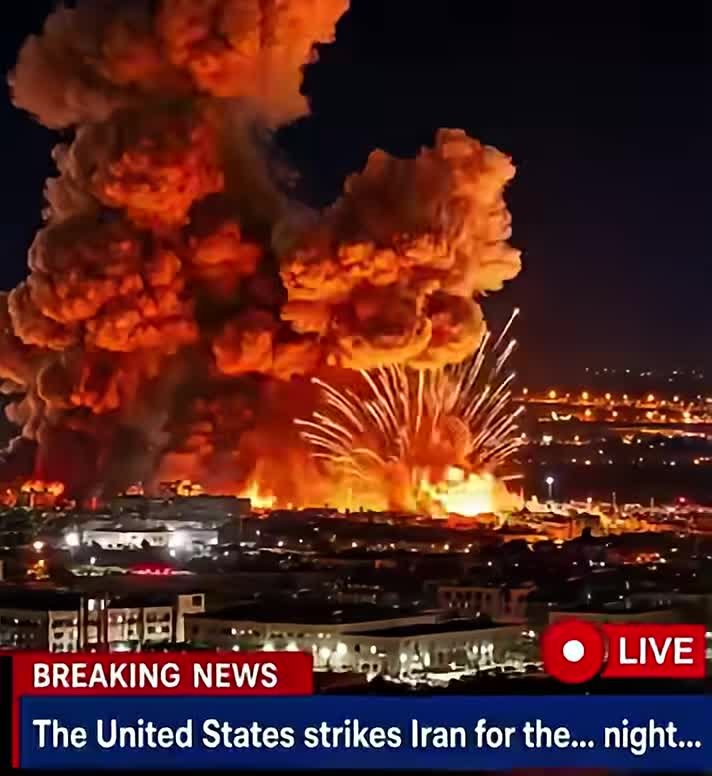
A Facebook reel pairs footage of a large fire and explosions with a banner saying the United States struck Iran. The caption stops before identifying an operation, and the clip supplies no date or location that would allow the images to be tied to a specific military statement. The footage shows a fire. The words over it supply the claim about who was responsible. The image and the claim need separate sourcing.
U.S. Central Command has issued public statements about strikes in Iran. For example, a statement dated May 31, 2026 describes strikes at locations in Goruk and on Qeshm Island. The command said those operations were carried out in self-defense. A separate statement in July describes another round of strikes and provides its own dates and description. Those releases give readers a way to understand what the command announced on specific dates. Neither is presented as the source of the video in the reel.
This distinction matters because footage can be uploaded again long after an event. A red banner reading live can remain on a clip when someone shares it days or months later. The time a viewer sees the post is therefore different from the time the camera recorded the scene. A repost can also combine video from one event with a headline about another. The absence of an identifiable location is especially important when there have been several publicly reported operations spanning different areas and dates.
The reel also does not identify who filmed the scene. The camera is far enough away to show a broad view of the fire and buildings in the foreground, but the available clip does not identify a site or show the events that led up to the explosion. A view from that distance cannot establish which party was responsible. A dated report that cites an agency or gives the original source of the recording would be needed to connect the images to a particular incident.
There are also limits to what the official releases themselves establish about independent footage. They document the military’s account of its own operations. A person can use a release to check the date, locations named and explanation the command provided. Using it to identify a separate video would require a link between the two. No such link appears in the recovered caption or in the video itself.
The claim in the reel is broadly about U.S. action in Iran. That subject has a documented public record, including the May and July releases. The specific scene shown in the reel remains unidentified. The most precise description is that a video of explosions circulated with a claim about U.S. strikes, while the date and origin of the footage could not be linked to a named operation. Readers can refer to the dated statements for what the command reported, with the caption treated as an unverified description of the images.
The difference between those two kinds of evidence is the key to reading a short clip like this. The official chronology gives context for why the topic appears in news coverage, and the clip shows what was visible to one camera. Confirming that they describe the same event requires an original recording, a location or another identifiable source.
May 31 CENTCOM statement and July CENTCOM statement