
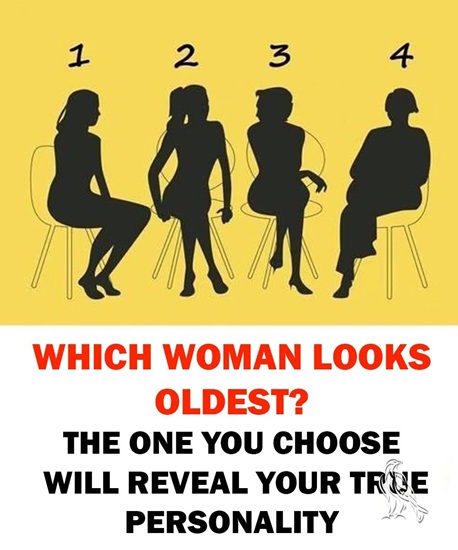
Personality tests based on first impressions have become extremely popular across social media platforms because they tap into something deeply human: our instinct to make quick judgments without consciously analyzing them. In daily life, the brain is constantly processing visual information and forming rapid impressions within seconds, often before we even realize it. These impressions are influenced by personal experience, emotional memory, and cultural background.
While these tests are not scientifically diagnostic tools, they remain highly engaging because they reveal how differently people interpret the same visual information. Two individuals can look at the exact same image and come away with completely different conclusions, both of which feel equally valid to them. This difference in perception is what makes these exercises both entertaining and thought-provoking.
The human brain is naturally drawn to patterns, symmetry, posture, and facial expression when assessing age or personality traits. Without conscious effort, we begin assigning meaning to these visual cues. That is why even a simple question like “Which woman looks the oldest?” can spark a wide range of interpretations. It is less about accuracy and more about perception.
A Simple Question With Different Interpretations
This particular visual test asks one straightforward question: which woman appears the oldest at first glance? The instruction is intentionally simple, encouraging participants to rely on instinct rather than overthinking. The goal is to capture the immediate reaction of the viewer, which is believed to reflect subconscious thinking patterns.
When people participate in these types of tests, they often discover that their first choice feels natural and immediate. That instinctive response is influenced by how the brain processes facial structure, posture, expression, and even emotional tone. However, it is important to remember that this is not a scientific measurement of personality or intelligence.
Instead, these tests are designed for entertainment and self-reflection. They encourage people to think about how perception works and how personal bias influences judgment. The same image can lead to different interpretations depending on mood, experience, and even cultural expectations of age and appearance.
If Woman #1 appears the oldest to you, it may suggest that you naturally pay attention to calmness, emotional stability, and composed behavior when observing others. You are likely someone who values inner balance over external excitement. In your perception, maturity is often associated with quiet confidence rather than dramatic expression.
People with this perspective are often seen as thoughtful and dependable. You may prefer environments that feel peaceful and structured, avoiding unnecessary conflict whenever possible. Instead of reacting quickly, you tend to observe situations carefully before forming conclusions or making decisions.
You also have a tendency to notice subtle details that others might overlook. Small changes in tone, posture, or behavior often stand out to you more than obvious signals. Because of this, others may naturally turn to you for advice, especially in situations that require emotional balance or practical thinking.
However, this sensitivity to detail can sometimes create internal pressure. You may feel responsible for maintaining stability in your surroundings, even when you are personally overwhelmed. Learning to balance emotional responsibility with self-care becomes an important part of your personal growth.
If Woman #2 stood out as the oldest to you, your perception may reflect a personality that values confidence, independence, and forward movement. You are likely drawn to individuals who appear strong, assertive, and decisive. In your view, age and maturity may be associated with energy, leadership, and presence.
You tend to notice confidence quickly in others, especially through body language and expression. You are not easily influenced by surface-level impressions and often form opinions based on how someone carries themselves in a situation. This makes your judgment intuitive but also bold.
People with this perspective are often ambitious and goal-oriented. You may constantly think about progress, improvement, and future possibilities. You are not afraid of challenges and often prefer taking action rather than waiting for circumstances to change on their own.
At the same time, this strong drive can sometimes make it difficult to slow down. You may push yourself toward goals continuously, even when rest is needed. Learning to balance ambition with patience is often a key part of long-term success and emotional well-being.
If Woman #3 immediately appeared the oldest to you, it may suggest that you are highly intuitive and emotionally aware. You tend to rely on feelings and instincts when interpreting people and situations. Emotional energy plays a major role in how you understand the world around you.
You value depth in communication and relationships. Superficial conversations or shallow interactions may feel unfulfilling or draining. Instead, you prefer meaningful discussions that explore thoughts, emotions, and personal experiences.
However, emotional sensitivity can sometimes lead to overthinking. You may replay conversations in your mind or analyze situations long after they occur. While this reflects your depth of thought, it can also create unnecessary emotional stress if not balanced with grounding habits.
If You Chose Woman #4
If Woman #4 stood out to you as the oldest, your perception may reflect a practical, logical, and grounded personality style. You tend to value realism and consistency over emotional interpretation. In your view, maturity is often associated with responsibility, structure, and control.
You are likely someone who prefers making decisions based on logic rather than impulse. You carefully evaluate situations before acting and rarely allow emotions to override your judgment. This makes you appear stable and dependable in the eyes of others.
At first, people may perceive you as reserved or emotionally distant. However, once trust is established, you show strong loyalty and commitment to those you care about. Your relationships tend to be stable and long-lasting because you value consistency.
Independence is also an important trait for you. You often prefer solving problems on your own rather than relying heavily on others. While this makes you strong and self-sufficient, it is also important to allow support from others when needed.
Why These Tests Feel So Engaging
Although personality tests like this are not scientifically accurate, they remain fascinating because they reflect how perception works in real life. Human judgment is shaped by emotional memory, cultural background, and personal experience. This means that no two people interpret the same image in exactly the same way.
What one person sees as maturity, another may see as confidence or calmness. These differences are not right or wrong—they simply reflect the diversity of human perception. That is why these visual tests continue to attract attention online and spark discussions among viewers.
At their core, these tests are less about defining personality and more about exploring perception. They remind us that reality is often filtered through personal experience, and what we “see” is influenced as much by our mind as by the image itself.